OFFICIAL DISTRIBUTOR LEDSTAR · SKYLIGHT · ZOO MED // Fast shipping // FREE SHIPPING FROM 100€

Guide to getting started in terrariums: choice of species and essential equipment
Is the temptation strong? Do you want to get into terrariophilia? You're right !
But before welcoming your first reptile, you will need to find out about the essential equipment for its well-being.
This blog will help you understand the rules to follow and the equipment needed before the arrival of your new friend.
Like any seasoned terrariophile, I went through this too, choosing my first NAC (new pet). I strongly advise you to start with a species that is easy to breed and born in captivity.
You have the choice between different species, but be careful the biotope is not necessarily the same for all species, to make it simpler each species has different living conditions (heat, light, humidity, etc.)
You will need to find out about the species' biotope before buying its terrarium.
Here is a non-exhaustive list of the ideal species for starting terrario:
-
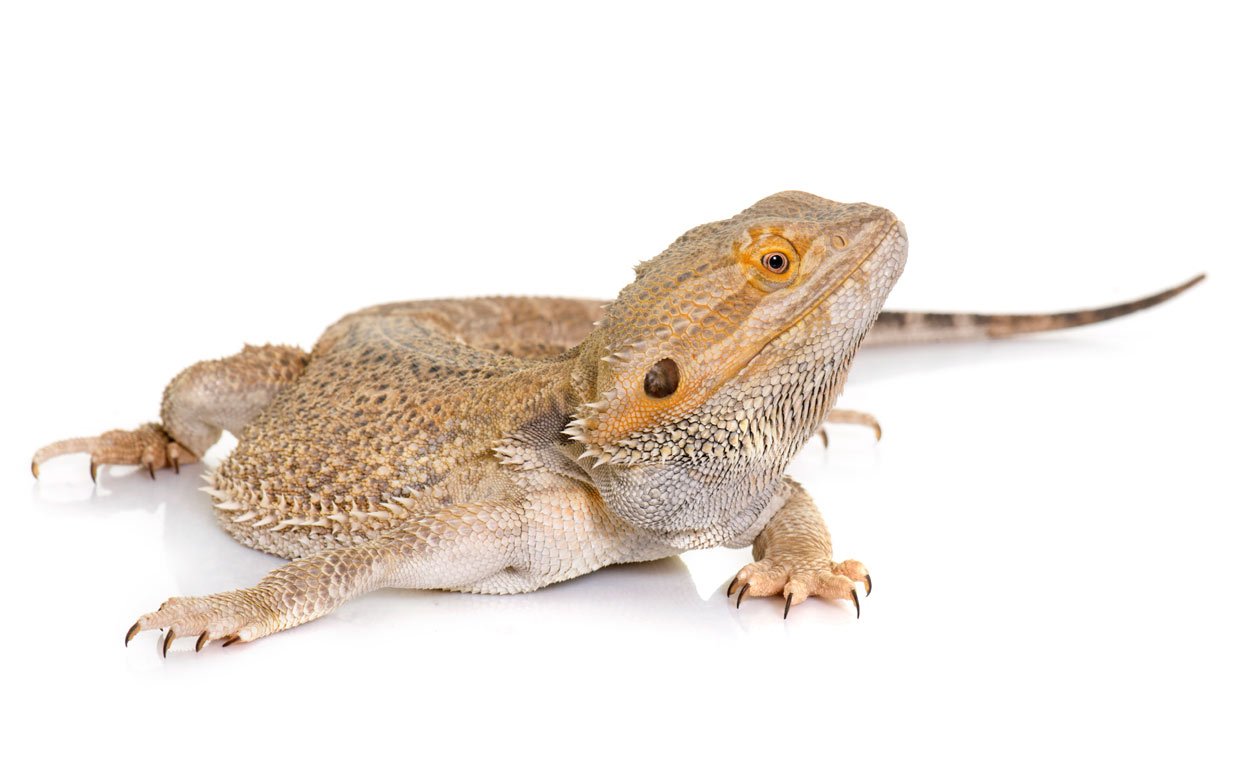
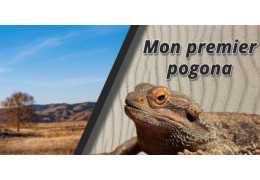
The Pogona or Bearded Dragon:
It is a very sociable lizard with humans, you will be able to create bonds with it. It will feed largely on insects before it is 1 year old, once its juvenile period has passed its diet will consist mainly of plants with always a few insects, but at much more spaced intervals.
Like us, he will need to bathe to clean himself, 2 to 3 times a week when he is young then 3 times a month when he is an adult. For the terrarium it is strongly recommended to start with a small one then once your pogona has reached 20cm to move on to a larger terrarium.
-
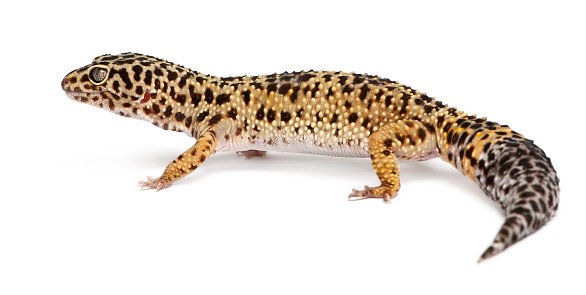
The Leopard Gecko:
I advise you to check out our blog above by clicking here . To quickly introduce it, it is a small Gecko which lives mainly at night, you can handle it and it will like to walk on you, but be careful it remains a reptile, you should not do it excessively. For maintenance, it feeds exclusively on insects; a small terrarium will suffice, making it an ideal companion in an apartment.
-
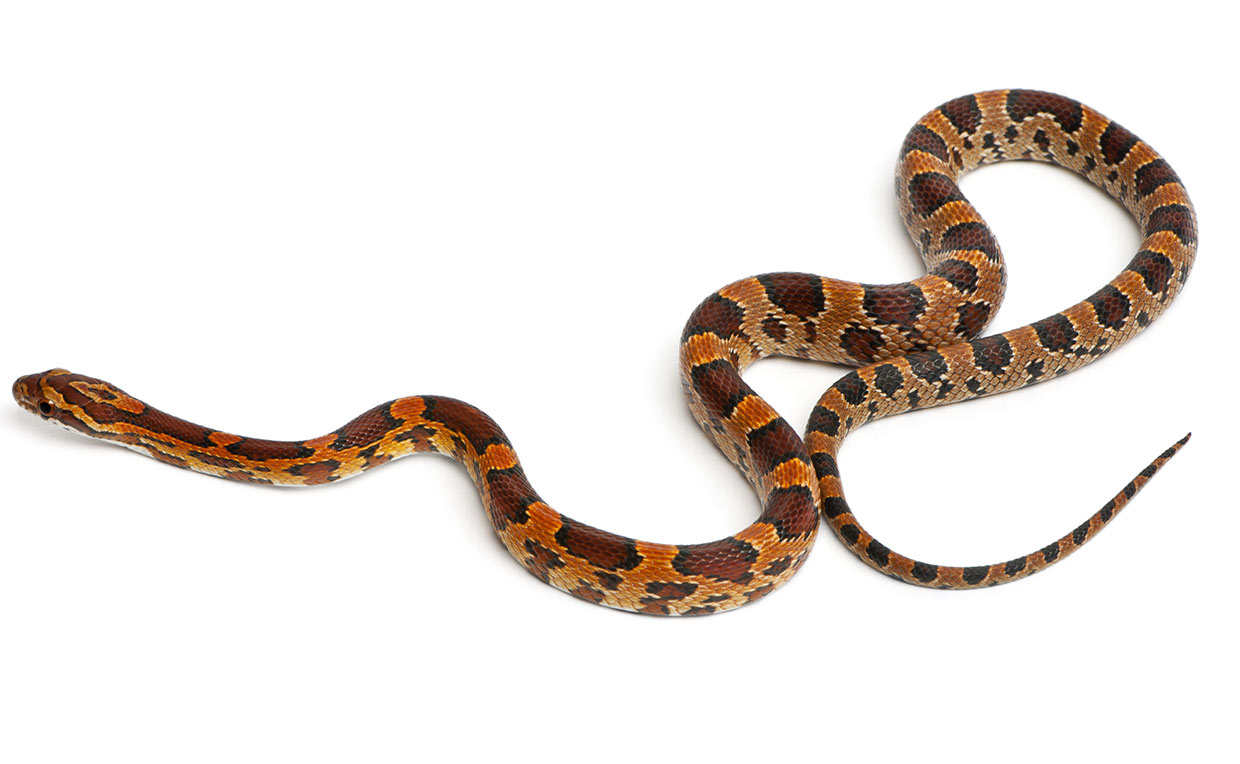
The Corn Snake or Pantherophis Guttatus:
This is the reptile that I chose to get started, be careful if you also want to adopt a snake you will have to take into consideration its life expectancy which is 15-20 years for a corn snake, its diet (rodents frozen) if you don't have room in the freezer or if frozen mice are not welcome there, lizards will be a wiser choice.
If these elements do not bother you, the corn snake will be a perfect companion to start with, it will need one mouse per week then one every 15 days as an adult. For the terrarium you will have to change it once when the snake has grown up.
You are up to date on the simplest species to start with, I will soon be writing a blog on the pogona and the corn snake to precisely describe their breeding.
I will now help you choose the best equipment for your reptile:
-
The terrarium
So far nothing surprising, you can buy it or make it yourself with OSB if you are a bit handy. For many species it will be necessary to change the size of the terrarium depending on the size of the reptile; starting directly with a large terrarium will be a source of stress for its occupant. Some species like to climb, so you will need to opt for a terrarium with a greater height.
If you want to build your own terrarium don't forget the vents to manage air flow.
-
Heating
You will have the choice between 3 types of heaters:
-the infrared and ceramic heating lamp produces heat similar to that of the sun, be careful to respect the distance between the lamp and the substrate to avoid burns. If you opt for a pogona, this is the heating method you will need.
-the heating cable allows you to obtain a hot spot in a desired location; it can be combined with a heating lamp. It also allows you to obtain an ambient temperature in the terrarium.
-The heating mat allows you to target a location in the terrarium for the hot spot, it can also be combined with a heating lamp.
For the cable and the mat, you can position them inside or outside, I advise you if you have a glass terrarium to place it outside to prevent your animal from getting burned.
For these 3 methods you MUST have a thermostat to regulate the temperature and to avoid any burns for the animal, some thermostats offer a day and night mode to best manage the reptile's needs.
-
Lighting
Lighting can be divided into 3 categories:
-daylight is essential to carry out the day-night cycle so as not to disturb the reptile, a bulb or LED strip will be perfect, I strongly recommend our TerraLED products which perfectly meet these needs, you can find them here , if you want to install living plants in your terra to make it more natural our LEDs have a perfect spectrum to encourage their growth.
-UVB light is necessary for reptiles, it helps fix vitamin D.3 which will allow good bone development and a strengthened skin immune system, but it can be dangerous if it is dosed too high. Some species like the corn snake do not need a lot of UVB, overexposure could cause irreversible damage such as blindness. Find out about your reptile's needs before installing one.
-Finally, infrared lamps make it possible to simulate the heat of the sun, it will be necessary to combine it with conventional lighting, because these are bulbs which generate heat and not light. Respect a distance of 30 cm between the substrate and the lamp then protect it with a cage to avoid any risk of burns.
-
The substrate
Above all, you must choose it with the well-being of the animal in mind.
-Sand should be avoided ! it can cause intestinal problems, because the reptile risks swallowing it while eating.
-Aspen, coconut, beech shavings are economical, will give a very beautiful natural result and above all are not dangerous for your reptile.
-
the accessories
Don't forget to buy a hiding place or even several, especially when your reptile is juvenile, it will need one to feel safe, a water point for hydration and decoration, branches for it to climb on. .
Here I hope to have guided you in the choice of your first terrarium
Related posts
 Guide for beginners in terrariophily: how to get started?
This article is a guide for beginners in terrariums, which provides the basics to get started in this exciting hobby....
Lire la suite
 Incredible plants: from the giant water lily to the silena stenophylla
This article talks about several surprising plants: The giant water lily, which can reach a meter in diameter in...
Lire la suite
 The Pogona, an ideal companion for beginners in terrariums
This article is devoted to the Pogona, also known as the bearded dragon, a lizard very popular in terrariums. The...
Lire la suite
Leave a comment
Log in to post comments